

LKG and UKG home tutor: what your child learns and how a tutor helps
LKG is about hearing sounds, counting real things and getting small fingers strong. UKG joins those sounds into words and puts numbers on paper. An LKG and UKG home tutor follows the same order at your home, from your child's own school books, so Class 1 feels like a small step when it comes.
This guide goes one school year at a time: LKG first, then UKG, then the last few months before Class 1. If you're thinking more about your child's age and attention span than the class, our guide to a home tutor for a 5 year old looks at it that way. Or skip the reading and send us your child's details, call or WhatsApp us.
First, the names: LKG, UKG, KG or Prep?
LKG and UKG are Lower and Upper Kindergarten, the two years after Nursery and before Class 1. Some schools call them KG and Prep. Children are usually about four in LKG and five in UKG, though schools differ.
CBSE doesn't set a fixed textbook for these years, so every school plans its own. That's why a good tutor opens your child's own books and activity sheets first, rather than a guidebook. The broad areas barely change from school to school, though, and the table shows how the focus usually grows from one year to the next.
| Area | LKG | UKG |
|---|---|---|
| Early reading | Hearing first sounds in words | Blending sounds into short words |
| Early writing | Lines, curves, first letters | Letters and numbers, own name |
| Numbers | Counting objects, more and less | Writing numbers, adding with objects |
| Talking | Rhymes, naming things | Retelling a short story in order |
| Shapes and patterns | Basic shapes, sorting by colour or size | Repeating patterns, sorting two ways |
| Hand skills | Play dough, threading big beads | Child-safe scissors, colouring in lines |
Read it as a map, not a deadline. Many schools also bring in Hindi sounds and letters during KG, though when they start varies.
LKG: sounds, lines and counting that means something
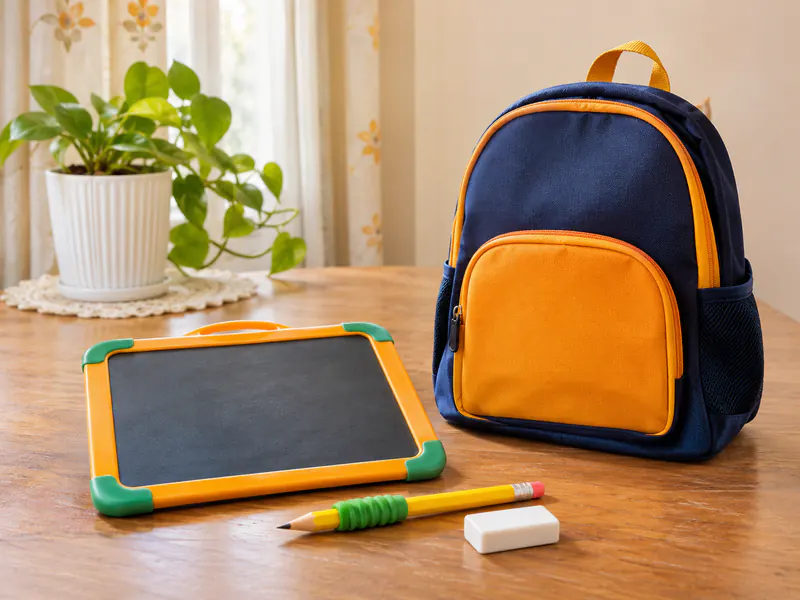
LKG is the ground floor, and very little of it looks like "proper" study. That's how it should be. Every game the tutor plays practises one part of the school plan: hearing how words begin, drawing lines before letters, counting toys one at a time, and talking about a picture. A little of each, most evenings, does more than a long sit-down on Sunday.
Sounds. Your child learns to hear how everyday words begin: sorting toys into two baskets by first sound, or spotting the odd one out in cat, hat and bus.
Lines before letters. The tutor practises them big first, in sand or on a slate, then small on paper, and only then the first letters.
Counting that means something. Reciting one to twenty is easy; touching each object once is harder. Your child slides each counted toy car to one side, then compares two groups: which has more?
Talking. Naming things, describing a picture and answering "what happened next?" build the words your child will read later.
Hand strength. Play dough, tearing paper and threading big beads get small fingers ready to hold a pencil.
UKG: when the homework copy starts asking for more
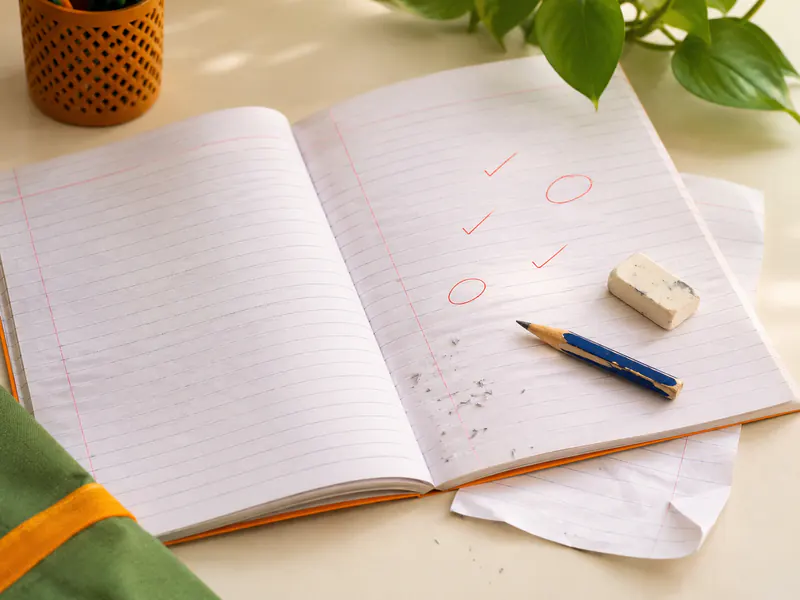
Somewhere in UKG, most parents notice the homework changing. The sheet that used to be all colouring now wants a letter written from memory, a missing number filled in, or a short word sounded out. It's a normal step up, not a sign that anything is wrong, and it's often the point when families first think about a tutor.
Sounds start joining into words, like s-u-n, sun. The tutor makes sure each letter is formed from the right starting point, so mix-ups such as b and d don't harden into habits. Our phonics home tutor guide goes further into early reading.
Numbers move from counting to writing: numerals in order, then adding and taking away with small groups of real objects. Patterns get longer, stories are retold in order, and if the school teaches Hindi letters, the tutor practises those too. A surprising part of the job is decoding activity sheets ("colour the pictures that start with the sound in the box") for your child, and sometimes for you.
Many CBSE schools take their lead from NCERT's framework for the foundational stage, which puts play, talk and stories at the centre of learning up to Class 2. A good tutor works in that spirit, even when the worksheet looks serious.
The last months of UKG: getting ready for Class 1
Class 1 changes the shape of the day. Slates give way to lined notebooks, a reader comes home in the school bag, and sums are written down instead of counted out on the table. A gentle run-up in the last term of UKG makes all of that feel familiar.
So in those months the tutor moves your child from tracing to writing alone, from slate to four-line notebook, and from objects to written sums.
Signs your UKG child is getting ready for Class 1
- Finishes a short activity without being reminded.
- Hears the first sound in a word and blends short words.
- Holds a pencil comfortably and writes their own name.
- Counts out objects and says how many there are.
None of this is a test. If a couple aren't there yet, the tutor simply works on the next small step. Reading together every evening helps as much as anything, and the National Book Trust publishes children's books in Hindi and English. Our Class 1 home tutor page explains what the year itself covers.
How we set it up is simple: we call you first, then the tutor comes for a free one-day demo class at home. If you go ahead, the first month's fee is paid to us in advance and the tutor directly from the second month. If the tutor stops coming in the first month, we arrange another tutor. How it works has the rest.
The two KG years, in a few lines
LKG is sounds, lines, counting and strong fingers, all through play. UKG turns sounds into words and counting into written numbers, and asks your child to finish a task alone. The last term is about making Class 1 feel like somewhere they've already been. Through all three, calm matters more than speed.
We find LKG and UKG tutors across Uttam Nagar, Janakpuri, Vikaspuri and Tilak Nagar, from Mohan Garden and Jeevan Park to Janakpuri B Block, Vikaspuri D Block and Tilak Vihar. Playway Teacher is run by Komal Nuna, who has been teaching since 2005; our page on Nursery and KG home tutors covers the whole pre-school stage.
When you're ready, fill in the short form, or call or WhatsApp us. The final choice of tutor is always yours.


