Contents
- Introduction to 10 Lines on Taj Mahal
- Quick Facts About Taj Mahal
- 10 Lines on Taj Mahal for Class 1
- 10 Lines on Taj Mahal for Class 2
- 10 Lines on Taj Mahal for Class 3
- Taj Mahal vs Red Fort
- 10 Lines on Taj Mahal for Class 4
- 10 Lines on Taj Mahal for Class 5
- 10 Lines on Taj Mahal for Class 6
- Final Thoughts
- Frequently Asked Questions
Introduction to 10 Lines on Taj Mahal
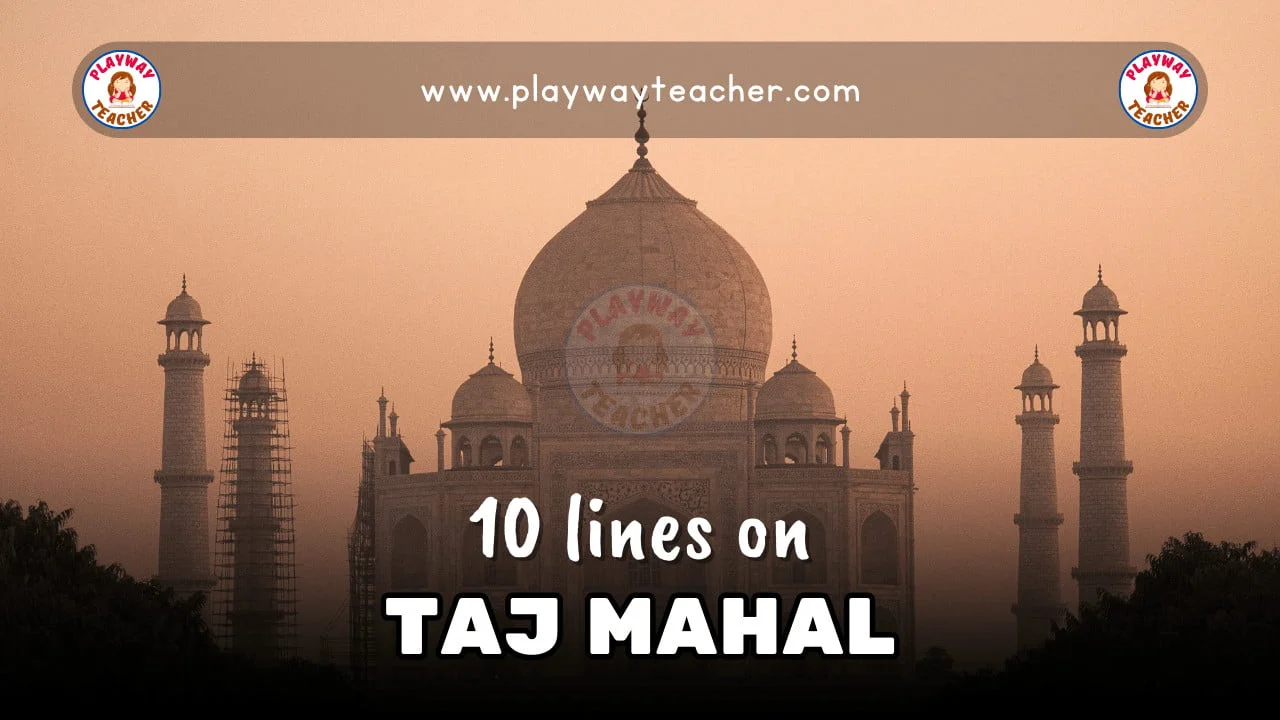
These 10 lines on the Taj Mahal provide a wonderful glimpse into India’s most famous monument for students. Located in Agra, this architectural marvel is not just a tourist spot but a significant part of our history, recognized by the National Portal of India for its cultural value. Learning about it helps children appreciate the rich heritage and artistic brilliance of the Mughal era.
The Taj Mahal is a popular topic for school projects, oral tests, and history assignments. Teachers often use this subject to introduce concepts of architecture, history, and love to young minds. If you are looking for more study materials, you can search for 10 lines on various topics on our website. These simple points are crafted to be helpful for students of CBSE, ICSE, and other State Boards.

Quick Facts About Taj Mahal
Agra, India
Shah Jahan
White Marble
World Wonder

10 Lines on Taj Mahal for Class 1
These 10 lines on Taj Mahal are perfect for Grade 1 students. They focus on the basic appearance and location of the monument using simple words.
- The Taj Mahal is a beautiful building.
- It is located in the city of Agra.
- It is made of smooth white marble.
- Shah Jahan built this lovely monument.
- It stands near the Yamuna river.
- We can see a big white dome on top.
- It has four tall towers around it.
- Many people visit it every day.
- It looks shiny in the bright sun.
- I love to see its pretty gardens.

10 Lines on Taj Mahal for Class 2
Class 2 students can use these lines to share more details about the history and beauty of the structure. The sentences remain short but include key names.
- The Taj Mahal is very famous worldwide.
- Emperor Shah Jahan made it for his wife.
- Her name was beautiful Mumtaz Mahal.
- It took many years to build it fully.
- The white marble feels cool to touch.
- It is one of the Seven Wonders of the World.
- Beautiful gardens surround the main building.
- Cars are not allowed very close to it.
- It looks like a pearl in the moonlight.
- People from all over the world come here.
Get experienced home tutors for History and Social Studies in Uttam Nagar, Vikaspuri, Dwarka & Janakpuri.
10 Lines on Taj Mahal for Class 3
For Class 3, we introduce observations about the surroundings and the importance of preserving this heritage. The lines describe the visual beauty in detail.
- This monument is a beautiful symbol of true love.
- Artisans used precious stones in the white walls.
- The Taj Mahal changes color during the day.
- It looks pinkish in the hazy early morning.
- The river Yamuna flows quietly behind the building.
- It has a very large main gateway made of red stone.
- There are water fountains in the long garden.
- Pollution is turning the white marble yellow.
- We must keep this heritage site clean and safe.
- It is a matter of great pride for our country India.
Taj Mahal vs Red Fort
| Taj Mahal | Red Fort |
|---|---|
| Located in Agra | Located in Delhi |
| Made of White Marble | Made of Red Sandstone |
| Built by Shah Jahan | Built by Shah Jahan |
| It is a Mausoleum (Tomb) | It is a Fort (Residence) |
| Symbol of Love | Symbol of Power |
| Took about 22 years | Took about 10 years |
| Famous for its dome | Famous for its walls |
| Next to Yamuna River | Next to Yamuna River |
| Has 4 Minarets | Has no Minarets |
| A UNESCO World Heritage Site | A UNESCO World Heritage Site |
10 Lines on Taj Mahal for Class 4
Class 4 students dive deeper into the architectural details and history. These lines cover the construction and specific features of the monument.
- The Taj Mahal is a grand mausoleum situated in Agra.
- Ustad Ahmad Lahori was the main architect of this wonder.
- It was built in the 17th century by the Mughal Empire.
- The four minarets tilt slightly outwards for safety.
- This design protects the main tomb if they fall.
- Beautiful calligraphy decorates the entrance walls.
- The garden follows the Mughal Charbagh style.
- It is a UNESCO World Heritage Site since 1983.
- The central dome is the most striking feature of it.
- It attracts millions of tourists every single year.
Find dedicated home tutors for all subjects in Uttam Nagar, Vikaspuri, Dwarka & Janakpuri today.
10 Lines on Taj Mahal for Class 5
In Class 5, students learn about materials and artistry. These lines explain the Pietra Dura art and the current environmental challenges.
- Construction of the Taj Mahal started in the year 1632.
- It took about twenty-two years to complete the work.
- White marble was brought from Makrana mines for it.
- Semi-precious stones were inlaid into the smooth marble.
- This art form is known as Pietra Dura.
- The structure is perfectly symmetrical from all sides.
- Only the grave of Shah Jahan is asymmetrical inside.
- Environmental experts worry about acid rain damage.
- Electric vehicles are used near it to stop pollution.
- It remains a masterpiece of Mughal architecture.
10 Lines on Taj Mahal for Class 6
Class 6 students analyze the architectural mix and historical context. These lines discuss the blend of styles and the structure of the complex.
- The Taj Mahal combines Islamic, Persian, and Indian styles.
- It houses the tombs of Shah Jahan and Mumtaz.
- The complex includes a mosque and a guest house.
- Red sandstone was used for the outer structures.
- The optical illusions in the architecture are fascinating.
- As you walk away, the Taj appears bigger.
- The cenotaphs inside are for public viewing only.
- The real graves lie in a quiet basement below.
- Lord Curzon helped restore it in the 20th century.
- It stands as a timeless testament to artistic brilliance.
Final Thoughts
The Taj Mahal is more than just a monument; it is a masterpiece that tells a story of love and history. By learning about its architecture and origin, students can gain a deeper appreciation for Indian heritage. We hope these 10 lines on the Taj Mahal help you with your school assignments and general knowledge. You can also explore our essays section for longer compositions on this topic.
Whether you are preparing for a quiz or just curious, understanding the facts about Shah Jahan and Mumtaz Mahal is fascinating. Parents and teachers can use these simple points to make history lessons fun and engaging. If you have any questions or want to share your own visit experience, feel free to leave a comment below.
Fact-Checked


Frequently Asked Questions
Was this helpful?
0 / 0

Playway Teacher simplifies school topics into easy, exam-ready notes. Curated by a former school teacher and active tutor with 15+ years of experience, our content is designed to help primary and middle school learners excel.