Contents
Introduction to Cow
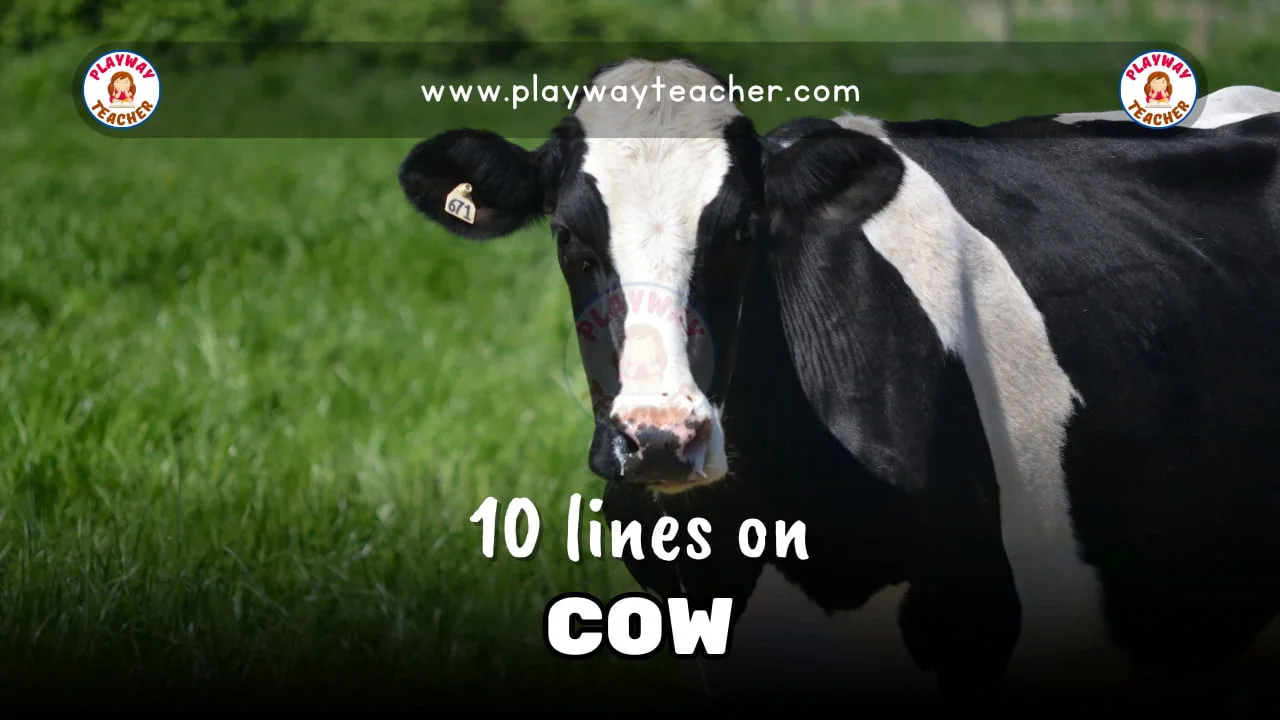
These 10 lines on cow are designed to help students understand the importance of this gentle domestic animal. Students often look for resources aligned with NCERT standards to improve their general knowledge about livestock and nature. The cow is not just an animal but a vital part of our agricultural life and culture.
Teachers frequently assign this topic for oral tests, essay writing, and short assignments because it encourages observation of the natural world. Learning about the cow helps younger students appreciate where their food comes from, especially dairy products. 10 lines on various topics like this are particularly helpful for students of CBSE, ICSE, and other State Boards to build vocabulary and sentence structure.

Quick Facts About Cows
Bos taurus
Herbivore
Moo
Herd

10 Lines on Cow for Class 1
These simple sentences help Class 1 students learn about the cow. They focus on basic physical features and what the cow does.
- The cow is a domestic animal.
- It has four strong legs.
- It eats green grass in the field.
- The cow gives us fresh milk.
- It has a long tail at the back.
- Cows have two sharp horns.
- It lives in a small shed.
- The cow makes a loud “moo” sound.
- Baby cows are called calves.
- We love the gentle cow.

10 Lines on Cow for Class 2
In Class 2, we introduce slightly more detail about the cow’s habits and its usefulness to humans. The vocabulary expands a bit here.
- The cow is a very useful animal for farmers.
- It has a big heavy body and a long tail.
- Cows eat fresh grass and dry hay.
- We get sweet and warm milk from the cow.
- Its milk is very healthy for growing kids.
- Cows have soft skin and short hair to touch.
- Many people keep cows at their homes.
- The cow is a very gentle animal.
- It chews its food slowly all day long.
- Farmers take good care of their cows.
Get experienced home tutors for all subjects and classes in Uttam Nagar, Vikaspuri, Dwarka & Janakpuri.
10 Lines on Cow for Class 3
Class 3 students can write slightly longer sentences. These lines cover the cow’s diet, appearance, and its importance in our culture.
- The cow is a four-footed domestic animal found everywhere.
- It provides us with nutritious milk every single day.
- Cows can be white, black, or brown in color.
- They eat grass, grains, and green vegetables.
- A cow’s house is commonly known as a shed.
- Hindus worship the cow as a mother figure.
- Cow milk is used to make yummy butter and cheese.
- The cow has a strong sense of smell for food.
- It uses its long tail to fly away insects.
- Cows are very calm and peaceful creatures.
Comparison: Cow vs. Buffalo
| Feature | Cow vs. Buffalo |
|---|---|
| Body Color | Usually white, brown, or black |
| Milk Fat | Lower fat content (lighter) |
| Water Preference | Avoids staying in water |
| Social Nature | Very gentle and mild |
| Hair Coat | Smoother and shorter hair |
| Heat Tolerance | Can tolerate heat better |
| Primary Use | Dairy and religious importance |
| Hump | Often has a visible hump |
| Food Intake | Consumes less fodder |
| Milk Color | Yellowish (Creamy) |
10 Lines on Cow for Class 4
For Class 4, the lines discuss the biological classification and the broader agricultural uses of the cow.
- The cow is an herbivorous animal that eats only plants.
- It is one of the most important livestock for farmers.
- Cow dung is used as fuel and rich fertilizer.
- We make curd, ghee, and sweets from cow milk.
- Cows have four distinct stomachs to digest food.
- In India, the cow is considered a sacred animal.
- They have large eyes and big ears.
- Cows spend a lot of time grazing in the fields.
- The sound of a cow is a deep and loud moo.
- People should treat cows with kindness and respect.
We provide qualified home tutors for all subjects in Uttam Nagar, Vikaspuri, Dwarka & Janakpuri to boost your child’s grades.
10 Lines on Cow for Class 5
Class 5 lines delve into the economic value of the cow and more scientific terms like “ruminants”.
- The cow plays a vital role in our agricultural economy.
- It provides dairy products that are essential for our diet.
- Cows are ruminants, meaning they bring food back to chew again.
- The cow is often called “Gau Mata” in Indian culture.
- Its milk is a complete food rich in calcium.
- Leather made from cow skin is used for shoes and bags.
- Biogas plants use cow dung to produce clean energy.
- Cows protect their calves from danger fiercely.
- The soft touch of a cow’s nose feels wet and cool.
- Taking care of a cow requires patience and hard work.
10 Lines on Cow for Class 6
Class 6 students explore the history of domestication, biological traits, and the environmental impact of cows.
- Cows have been domesticated by humans for thousands of years.
- They are social animals and like to stay in large herds.
- The gestation period of a cow is about nine months.
- Different breeds of cows produce varying amounts of milk.
- Cow urine is used in some traditional Ayurvedic medicines.
- Dairy farming is a major source of income for many villagers.
- Cows have a panoramic field of vision to see dangers.
- The fresh smell of a cow shed is distinct and earthy.
- They can spot predators easily due to their eye placement.
- Preserving the cow population is important for the ecosystem.
Final Thoughts
The cow is truly a fascinating animal that provides us with nutritious dairy products and helps in cattle farming. From being a sacred animal in many cultures to supporting milk production industries, its value is immense. Understanding its role as a gentle herbivore helps us appreciate nature better.
We hope these lines help you in your studies and homework. Explore our short essays to find more content like this. Remember to treat all animals with kindness.
Do you have a favorite story about a cow? Leave a comment below to share your thoughts on the cow!
Fact-Checked


Frequently Asked Questions
Was this helpful?
0 / 0

Playway Teacher simplifies school topics into easy, exam-ready notes. Curated by a former school teacher and active tutor with 15+ years of experience, our content is designed to help primary and middle school learners excel.